

Childhood Autism Testing in Minneapolis
Maybe your pediatrician mentioned it. Maybe a teacher brought it up at conference time. Or maybe you’ve just had this quiet feeling for months that something’s different about the way your child connects with the world.
That feeling matters.
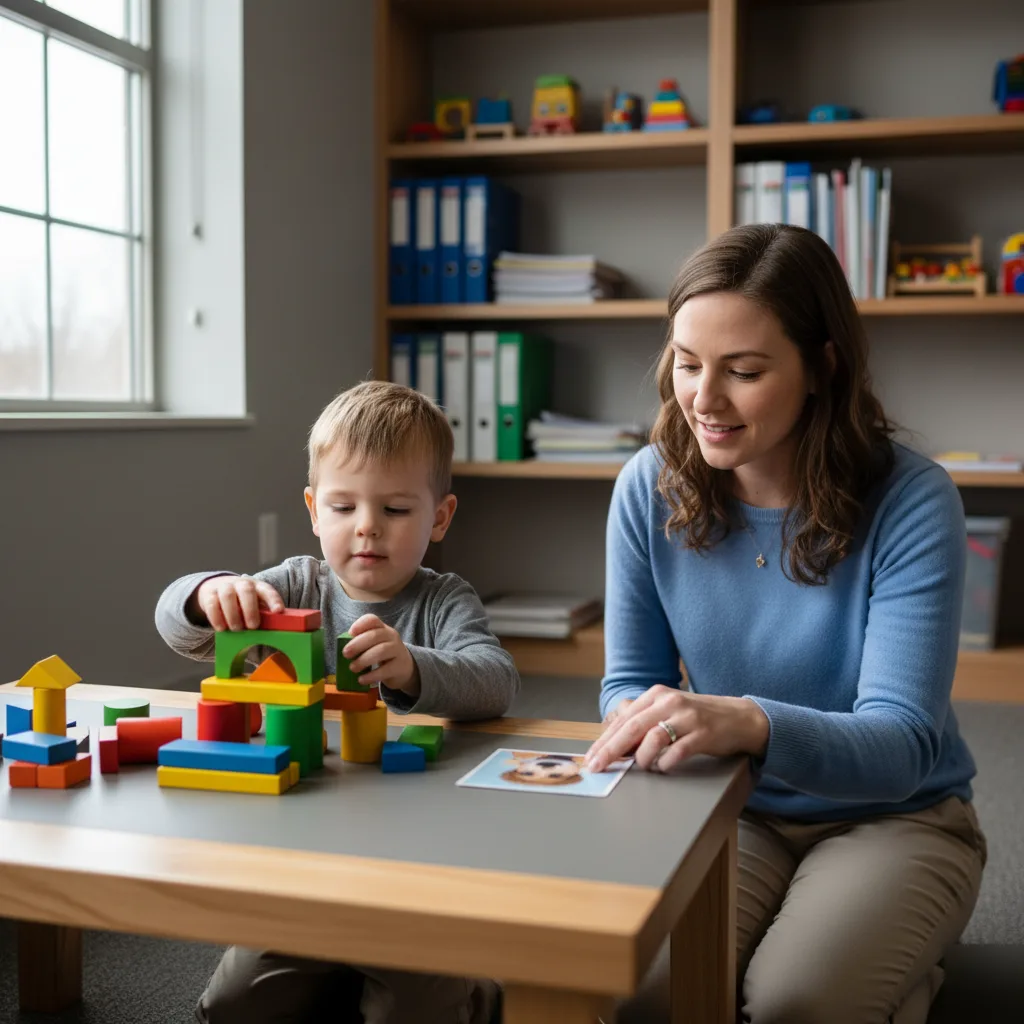
Table of Contents
ToggleSigns Your Child May Be Ready for a Full Autism Evaluation
We talk to Minneapolis families every week who describe the same thing. They notice their child struggles in ways other kids don’t, but they can’t quite pin it down. It’s not always dramatic. Sometimes it’s subtle patterns that build up over time. Here’s what we hear most often from parents who end up booking childhood autism testing with a child psychologist in Minneapolis:
- Your child avoids eye contact or seems to “look through” people during conversation
- They repeat phrases or scripts from shows instead of forming their own sentences
- Transitions between activities cause meltdowns that feel bigger than the situation
- They play alone by choice, lining things up or sorting objects rather than engaging in pretend play
- Loud spaces like school cafeterias or gyms trigger shutdowns or panic
None of these signs alone means your child is on the spectrum. But when you see a cluster of them, it’s worth looking deeper
When "Wait and See" Stops Working
A lot of parents tell us they were told to wait. Give it six months. See if they grow out of it. And sometimes kids do shift on their own. But we see this pattern constantly: families wait a year, the behaviors stay the same or get harder to manage, and now they wish they’d started sooner. According to the American Academy of Pediatrics, early identification leads to better access to support during the years when a child’s brain is most flexible.
So if your gut says something’s going on, trust it. You know your child better than anyone.
The kids we evaluate range from toddlers who aren’t hitting speech milestones to older children who mask well at school but fall apart at home. There’s no single profile. That’s exactly why a full evaluation matters more than a quick screening. We look at the whole picture, not just a checklist.
Not sure if your child is ready for testing? That’s actually the most common question we get. Give us a call and we’ll help you figure out whether it’s time.
What a Private Evaluation Covers That a School Assessment Does Not
We hear this one all the time. A family gets a school evaluation, and it comes back saying their child “doesn’t qualify.” That doesn’t mean your child isn’t autistic. It means the school wasn’t looking at the full picture.
We hear this one all the time. A family gets a school evaluation, and it comes back saying their child “doesn’t qualify.” That doesn’t mean your child isn’t autistic. It means the school wasn’t looking at the full picture.
Our child psychology services in Minneapolis can help families understand when a private evaluation is needed beyond what a school assessment can answer.
School assessments are built around one question: does this child need special education services to access the curriculum? That’s it. They’re not designed to give you a clinical diagnosis. So a bright kid who’s masking all day, holding it together through class, then melting down the second they get home? The school might never flag that child.
A private childhood autism testing evaluation goes much deeper. We’re not just checking whether your kid can sit in a chair and follow directions. We’re looking at the whole child, across every setting, not just the classroom. Here’s what a private evaluation typically includes that a school assessment does not:
- A full developmental history going back to infancy, gathered directly from parents and caregivers
- Standardized diagnostic tools like the ADOS-2, which is considered the gold standard for autism evaluation
- Cognitive and adaptive behavior testing to understand how your child functions day to day
- Assessment of sensory processing, emotional regulation, and social communication patterns outside of school
- A written clinical diagnosis you can take to your pediatrician, insurance company, or any provider
That last point matters more than people realize. Without a clinical diagnosis, you can’t access certain therapies, insurance coverage, or community supports. A school label of “educational autism” doesn’t open those doors.
Most families who come to us after a school evaluation say the same thing: “We knew something was going on, but nobody would put a name on it.” Our licensed psychologists spend hours with your child. Not minutes. We observe, we test, we listen to you. Because you know your kid better than any checklist does.
If you’ve already been through the school process and still don’t have answers, that’s a common reason families in Minneapolis reach out. You can visit our child psychology services in Minneapolis to see how we work with kids and families. A private evaluation gives you clarity, and clarity is what lets you move forward.
The Childhood Autism Evaluation Process Step by Step
Parents always ask us what the actual process looks like. Fair question. It can feel like a black box from the outside, so here’s exactly what happens when you bring your child in for childhood autism testing at our Minneapolis office.
- Parent intake interview. We sit down with you first. No child present. You tell us what you’ve noticed, what teachers have said, what keeps you up at night. This conversation usually runs about an hour.
- Record review. We look at school reports, speech therapy notes, pediatrician records. Anything that helps us see the full picture before we ever meet your kid.
- Direct child assessment. This is where our licensed psychologist spends structured one-on-one time with your child. We use play-based and interactive tools designed for their age. Most kids actually enjoy it.
- Behavioral observation. We watch how your child communicates, responds to changes, and interacts during the session. These moments tell us more than any checklist.
- Standardized testing. We use gold-standard instruments recommended by the American Academy of Pediatrics. These aren’t pass-fail tests. They measure social communication patterns, repetitive behaviors, and sensory responses.
- Scoring and clinical analysis. Our team reviews every data point together. We don’t rush this part, it usually takes several days.
- Feedback session. You come back in and we walk through everything. Plain language. No jargon. You’ll leave with a written report and clear next steps.
The whole process typically spans two to three appointments over a few weeks. Spacing it out works better for kids. They’re fresher. Less overwhelmed.
We see this every week. A parent comes in nervous, not sure what to expect. By the feedback session they’re relieved just to finally have answers. That’s the whole point.
One thing worth knowing: we coordinate with your child’s pediatrician and school team if you want us to. That report doesn’t just sit in a drawer. It becomes a tool that helps your child get the right support in Minneapolis classrooms and beyond.
How Co-Occurring Conditions Are Identified During Testing
Most kids we evaluate don’t show up with just one thing going on. That’s the honest truth of this work.
A child might come in because their parents noticed rigid routines and meltdowns at school. But during childhood autism testing, we also spot patterns that point to ADHD, anxiety, or OCD running alongside autism traits. These overlapping conditions are called co-occurring, and catching them early changes the whole direction of support. We see this combination in our Minneapolis office more often than not.
What We're Watching For
Our clinicians don’t just check one box and move on. The evaluation process is built to catch layers. Here’s what we’re actively screening during every assessment:
- Attention and focus patterns that could signal ADHD alongside autism
- Repetitive thoughts or rituals that look like OCD but feel different from autistic routines
- Anxiety responses, especially social anxiety that gets mistaken for autism-related withdrawal
- Mood shifts or emotional regulation struggles that need their own treatment plan
A child who has both autism and ADHD needs a different approach than a child with autism alone. Miss the ADHD piece, you end up with strategies that only work halfway. We’ve watched families try interventions for months with no progress, only to learn a second condition was never identified.
Our licensed psychologists use standardized tools and direct observation to tease apart what’s autism, what’s something else, and where they overlap. It’s careful work. Sometimes a behavior looks identical on the surface but comes from a completely different place in the brain.
And here’s what parents tell us matters most. They want one clear picture, not five separate appointments with five different providers trying to piece things together. That’s exactly what a thorough evaluation gives you. One report that names everything present, explains how the conditions interact, and lays out next steps for each one.
Families leave saying they finally understand what’s been going on. Not just the autism piece, the full picture.
Using Your Child’s Evaluation Report to Access School Support in Minneapolis
The evaluation report isn’t the finish line. It’s the tool that opens doors.
Once childhood autism testing is done, you’ll have a detailed document that explains how your child thinks, learns, and processes the world. Minneapolis Public Schools can use it to build real support around your kid. But here’s the thing most parents don’t realize: the school won’t always know what to do with it unless you bring it to the right meeting with the right request.
What the Report Gives You
Our evaluation reports are written so parents and school teams can both understand them. We include specific, practical recommendations. Not vague suggestions. Things like:
- Whether your child qualifies for an IEP or a 504 plan
- Sensory accommodations for the classroom
- Social skills support or small-group instruction needs
- Recommendations for speech, occupational therapy, or behavioral support
We see families bring these reports to their school teams and walk out with a plan that actually fits their child. That’s the goal every time.
Taking the Next Step With Your School
You’ll want to request a special education evaluation meeting through your child’s school. Bring the report. Share it with the team before the meeting if you can. The school district has its own process, but an outside evaluation from a licensed psychologist carries real weight in those conversations.
And if the school pushes back or says they want to do their own testing first? That’s normal. It doesn’t cancel out what we found. The two reports can work together and often paint a fuller picture of what your child needs during the school day.
We walk families through this part too. Not just handing over a document and wishing you luck. Our team talks through every recommendation with you so you feel ready to advocate at that table. Parents tell us the hardest part wasn’t the testing. It was figuring out what to do next. That’s exactly why we stay involved after the report is finished.
Want help making sense of the school support process? Give us a call.
Frequently Asked Questions
Q: How long does a childhood autism evaluation take in Minneapolis?
A: Most evaluations take two to three appointments spread over one to two weeks. The first session is a parent interview, usually about an hour. Then your child comes in for direct testing, which can run two to three hours depending on age. After that, our psychologist scores everything and writes the full report. You get a feedback session where we walk you through every finding and answer your questions.
Q: What is the difference between a school autism assessment and a private evaluation?
A: A school assessment only asks one question: does your child need special education services? A private evaluation gives you a clinical diagnosis. That diagnosis is what opens doors to therapy, insurance coverage, and community supports. Many Minneapolis families come to us after a school evaluation came back negative, but their child was still clearly struggling. A private evaluation looks at the whole child, not just classroom behavior.
Q: What should I bring to my child’s first autism testing appointment?
A: Bring any records you already have. That includes school reports, speech therapy notes, and pediatrician records. If your child has had any previous evaluations, bring those too. It also helps to jot down specific behaviors you’ve noticed at home before you come in. You know your child best, and that information shapes the entire evaluation. You do not need a referral to get started with us.
Q: At what age can a child be tested for autism in Minneapolis?
A: Children can be evaluated as young as 18 months. We work with toddlers who aren’t hitting speech milestones and with older kids who mask well at school but struggle at home. There is no age that is too early or too late to get answers. The sooner you have a clear picture, the sooner your child can get the right support. If you are unsure whether your child is old enough, just call us.
Q: Does Minneapolis weather or school schedule affect when I should book an evaluation?
A: Booking during the school year actually works in your favor. We can gather teacher input and review current school reports while they are fresh. Many Minneapolis families schedule during fall or winter so results are ready before spring IEP meetings or school placement decisions. Summer works too, especially if your child is less stressed outside of the school routine. We schedule based on what works best for your family.
Q: What happens after the evaluation is complete?
A: You get a full written report with a clear clinical diagnosis, or a clear explanation of why criteria were not met. We then sit down with you to go over every finding in plain language. You leave with a document you can share with your pediatrician, school, insurance company, or any therapist. We also give you specific recommendations for next steps so you are not left figuring it out alone.
Our Insurance Partners
We accept most major insurance plans to make care accessible


Cabot Clients Say
"Sessions with Amanda are empowering."
Sessions with Amanda are empowering. She is a deeply kind therapist who has helped me to process, heal, and develop as a person.
"I have been a client of Cabot since the inception in 2010"
I have been a client of Cabot since the inception in 2010; my experience with the therapists and administrative staff have always been positive. I trust them and have referred both family and friends to Cabot and all have come back thanking me for the referral and have benefited from the caring and compassionate work of the Cabot staff.
"Cabot provides a welcoming and safe environment"
Cabot provides a welcoming and safe environment for those who may be struggling or need additional support. Each time I come for an appointment I am welcomed with a smile and hello not only from my therapist but others who pass through the waiting room.

REACH OUT TO START YOUR HEALING JOURNEY TODAY
Fill out our form or call us directly to learn if Cabot Psychological Services is right for you or a loved one.


WE PROUDLY PARTNER WITH MANY MAJOR INSURANCE PROVIDERS, INCLUDING COMMERCIAL AND MEDICAID