

Do I Have to Commit to Video-Only Sessions?
By Cabot Psychological Services · Published 2026-10-14 · Last updated 2026-10-14
Table of Contents
ToggleIf you’re asking, do I have to commit to video-only sessions, the answer is no: you can usually switch to in-person therapy, or mix both, by talking with your therapist. Cabot Psychological Services offers telehealth therapy across Minnesota plus in-person sessions at offices in Minneapolis and Edina. Whether a switch works for you depends on your therapist’s in-person availability and which office they use. Insurance coverage can differ between telehealth and in-person visits, so we verify your insurance, including Medicaid and Medicare, before your first appointment.
Can I Switch From Video Therapy to In-Person Sessions Later?
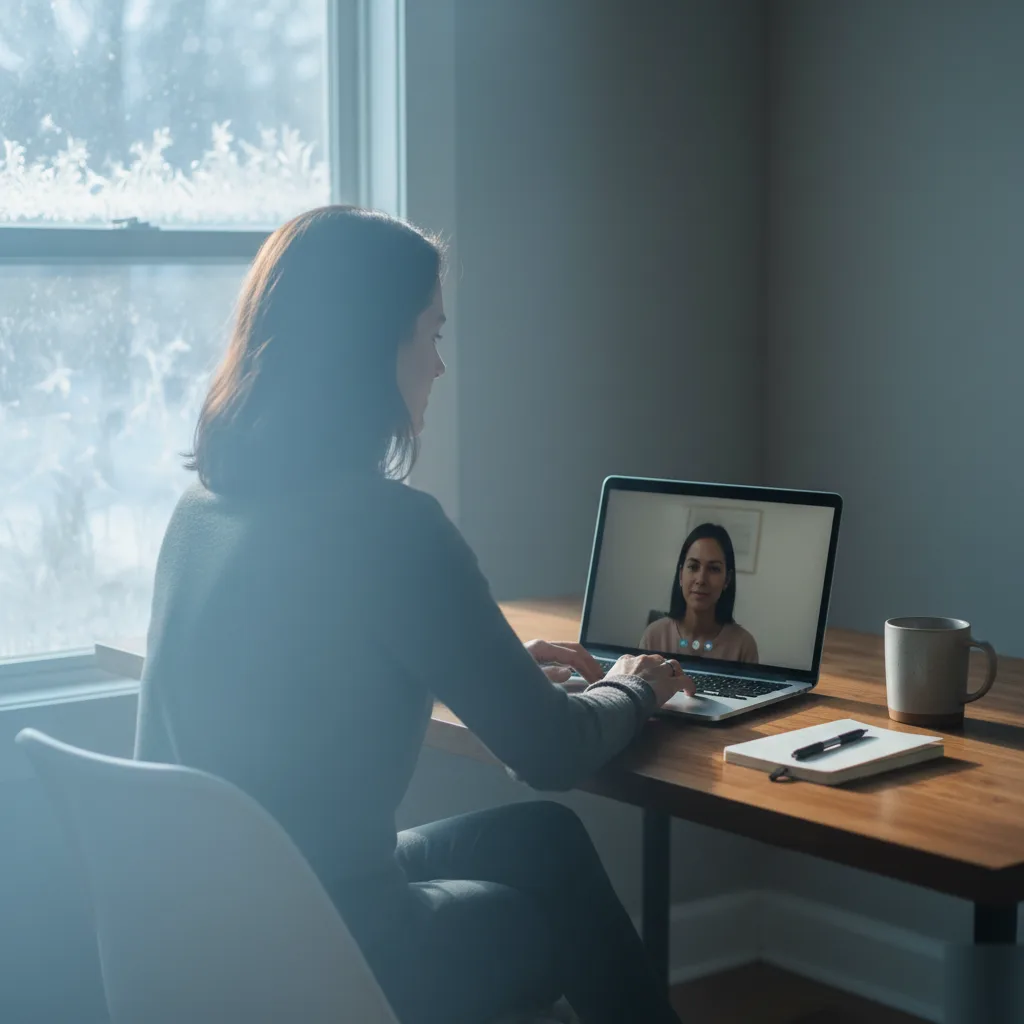
Usually, yes. At a practice that offers both formats, you can typically move from video to in-person sessions, or back again, by talking with your therapist about it. Cabot Psychological Services provides telehealth therapy across Minnesota and in-person care at two offices, one in Minneapolis and one in Edina, so starting on video doesn’t have to lock you into that format.
The main limit is usually scheduling. In-person availability can differ from one clinician to another, so before you plan a switch, ask whether your therapist sees clients in person and at which location.
People change formats for ordinary reasons. A new job may put the office on your commute. You may want a room away from roommates or kids. Or you may simply feel ready for face-to-face work after starting online. Asking to change formats is a normal, practical request. It doesn’t mean therapy is failing or that you did something wrong.
How do I ask my therapist to change formats?
Bring it up at the start or end of a session, or contact the office before your next appointment. Say which format you want and why. Four steps cover most of the conversation:
- Name the format you want: in-person, video, or a mix.
- Share the days or times that work for you.
- Ask which office your therapist uses.
- Confirm your insurance covers the new format.
A simple way to say it: “I’d like to try coming into the office. Do you have in-person times at the Edina location?”
You can also use our online booking through SimplePractice to see open times without calling.
Will switching formats mean starting over?
No. Changing from video to in-person with the same therapist does not erase your progress. Your goals and the work you’ve already done carry over.
If your current therapist only works in one format, you still have options. Our multi-disciplinary team includes clinicians with PhD, LP, LICSW, LMFT, LADC, and LGSW credentials, and we offer multi-provider treatment coordination. Ask how a handoff would work if you need one. When you can, though, keep the same therapist. Trust built over video still counts once you’re in the room.
Where Are In-Person Sessions Held If I Stop Doing Video?
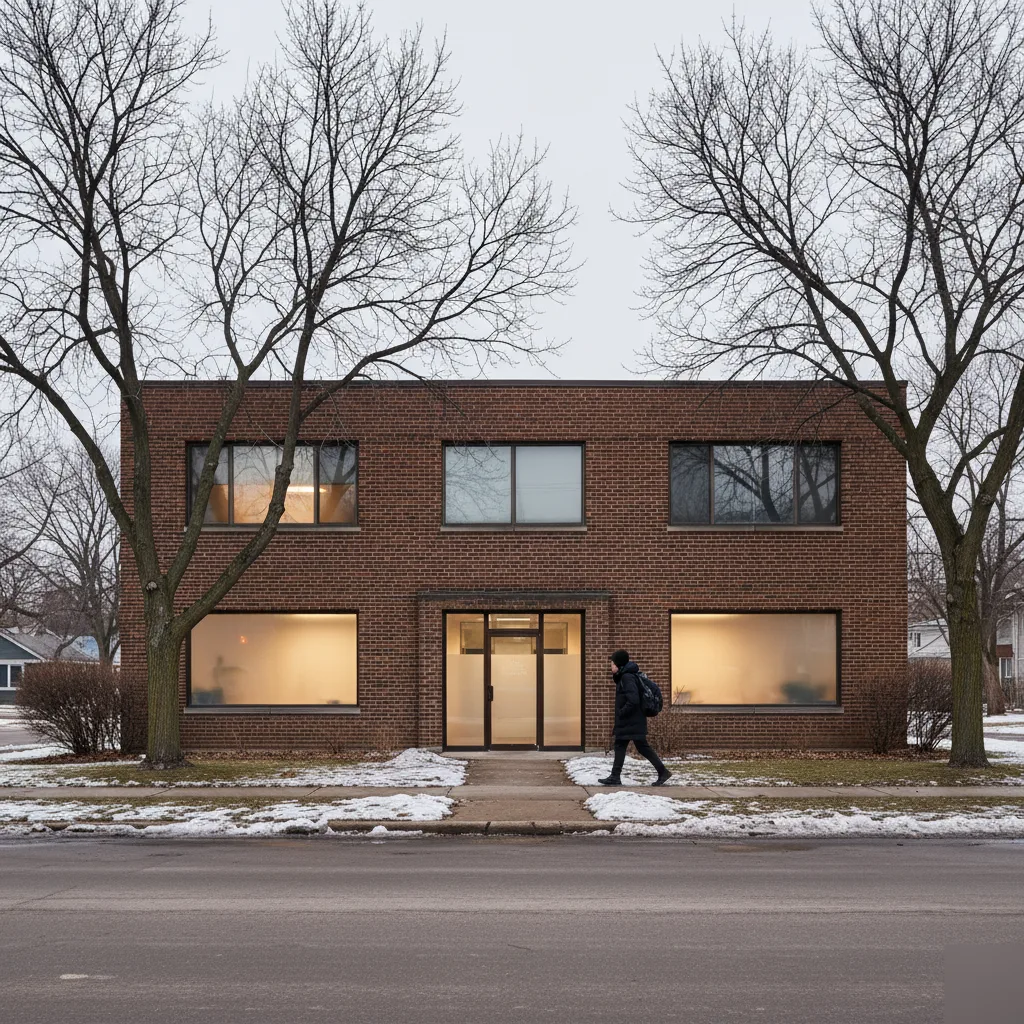
In-person sessions take place at our Minneapolis office or our Edina office, depending on where your therapist sees clients. The two locations serve different parts of the metro, and the right one often comes down to how you get around.
The Minneapolis office is a natural fit for people living in Loring Park, Whittier, and Stevens Square. Many residents of these neighborhoods rely on transit rather than a car, so a city office keeps in-person therapy realistic.
The Edina office may suit people who drive in from Edina and nearby suburbs.
| Office | Often easiest for |
|---|---|
| Minneapolis | Loring Park, Whittier, Stevens Square, and transit riders |
| Edina | Edina and nearby suburbs, for people who drive |
Edina is a car-dependent suburb. If you live in a dense city neighborhood without a car, the Edina office may be hard to reach on a regular schedule. In that case, telehealth or the Minneapolis office is usually the more workable plan.
When you book, confirm the office and appointment times with your therapist so you know exactly where to go for your first in-person visit.
Does Insurance Cover Both Video and In-Person Therapy?
Many insurance plans cover both video and in-person therapy, but benefits differ by plan, so confirm coverage for the specific format you plan to use. In Minnesota, the Minnesota Telehealth Act requires state-regulated health plans to cover services delivered by telehealth in the same manner as other covered benefits. Medicare, Medicaid, and some employer plans follow their own rules. We verify your insurance coverage before your first appointment, so you’re not left to sort out benefits on your own.
Cabot Psychological Services accepts a broad range of insurance, including Medicaid and Medicare. Many private psychology practices don’t take these plans. If you rely on one of them, that matters whether you meet on video or in the office.
Ask about coverage again when you change formats. Cost-sharing and session rules can vary by plan type, and a change in format can affect what you pay.
Before you switch, ask your insurer or our team:
- Is my copay the same for telehealth and in-person visits?
- Does my plan limit the number of sessions in either format?
- Do I need any approval or referral before changing formats?
It’s better to know the number before you switch than to find out from a bill. The median household income in ZIP 55403, which covers Loring Park, Whittier, and Stevens Square, is $58,895, meaningfully below the broader Minneapolis-area median. When a budget is tight, one unexpected charge can be enough to make you stop coming.
Is Video Therapy as Effective as In-Person Therapy?
For many common concerns, such as anxiety and depression, research suggests video therapy can work about as well as meeting in person. Several evidence-based approaches we use can translate well to a screen: Cognitive Behavioral Therapy (CBT), Acceptance and Commitment Therapy (ACT), and Dialectical Behavior Therapy (DBT) skills work. CBT is a structured method for noticing and changing unhelpful thought and behavior patterns. These approaches center on conversation, worksheets, and practice between sessions, and none of that requires sharing a room.
Because regular attendance matters, the better format is often the one you can keep up with week to week.
Personal comfort counts too. Some people open up more from their own couch. Others need a separate room away from home before they feel settled enough to talk.
When in-person care may be the better fit
Some services and some people do better in the room, so ask your clinician which format they recommend for your situation. Play therapy for younger children is one example. It uses toys, art, and games to help children express what they can’t yet put into words, and a room set up for play may help. Formal testing is another: psychological testing, autism evaluations, and neuropsychological evaluations may involve in-person tasks, so ask how your evaluation is structured. And if you have no private space at home and can’t talk without being overheard, the office may give you more privacy.
People working on trauma or PTSD, including those in EMDR therapy, should talk with their therapist about which setting feels steadier. Some find home grounding. Others want home kept separate from hard memories.
When Does Video Therapy Make More Sense Than Going to the Office?

Video therapy usually makes more sense when travel, weather, time, or distance would otherwise keep you from attending sessions regularly. Showing up consistently tends to matter more than where the session happens.
Common situations where video helps:
- Winter. From November through February, Edina brings ice and limited daylight. Winter can also deepen low mood, including seasonal depression. Video removes the drive or bus ride in the dark.
- Distance. Much of Minnesota outside the Twin Cities core has mental health workforce shortages. Because our telehealth is available statewide, people in greater Minnesota and the outer suburbs can reach a licensed therapist they may not find nearby.
- Work schedule. Healthcare workers and other busy professionals near HCMC, Hennepin Healthcare, or the University of Minnesota medical campus may find it easier to fit a session around their shifts without crossing town.
- Caregiving at home. If you care for a child, partner, or parent, leaving the house for an hour plus travel may not be possible every week.
You don’t have to choose one format for the whole year. Some people prefer a mix, such as video sessions in winter and in-person visits in spring. That’s a reasonable plan to suggest to your therapist, and it can keep therapy steady through the months when getting to an office is hardest.
Can I Keep Doing Video Sessions If I Travel Outside Minnesota?
Usually not. Therapists are licensed by state, and telehealth licensing rules are generally based on where you are physically located during the session. That means you’ll usually need to be in Minnesota. The clinicians at Cabot Psychological Services hold Minnesota licenses, including LP, LICSW, LMFT, and LADC credentials, which is why we offer telehealth statewide in Minnesota. Ask your therapist about any specific trip.
If you’re a snowbird, a student heading out of state, or traveling for work, tell your therapist about trips ahead of time. You can plan sessions before you leave and after you return, or use in-person visits while you’re home.
The U.S. Department of Health and Human Services offers patient guidance on preparing for a telehealth visit. Before your video session, find a private room where you won’t be overheard, make sure your internet connection is steady, and have headphones ready to keep the conversation private and clear.
One safety note applies to both formats. Scheduled therapy sessions, whether on video or in person, are not a substitute for emergency services. In a mental health crisis, call or text 988 or go to the nearest emergency room.
Choosing a Session Format That Fits Your Life Right Now
You do not have to pick video forever. Session format is a scheduling choice you can revisit with your therapist as your job, housing, or season changes.
Before switching, confirm three things:
- whether your therapist offers in-person times
- which office they use (Minneapolis or Edina)
- whether your insurance covers the new format at the same cost
Cabot Psychological Services has been in practice since 2010. If you’re ready to start or want to change how you meet, you can book through our online SimplePractice scheduler or ask our team about in-person and online options.
Our Insurance Partners
We accept most major insurance plans to make care accessible


Cabot Clients Say
"Sessions with Amanda are empowering."
Sessions with Amanda are empowering. She is a deeply kind therapist who has helped me to process, heal, and develop as a person.
"I have been a client of Cabot since the inception in 2010"
I have been a client of Cabot since the inception in 2010; my experience with the therapists and administrative staff have always been positive. I trust them and have referred both family and friends to Cabot and all have come back thanking me for the referral and have benefited from the caring and compassionate work of the Cabot staff.
"Cabot provides a welcoming and safe environment"
Cabot provides a welcoming and safe environment for those who may be struggling or need additional support. Each time I come for an appointment I am welcomed with a smile and hello not only from my therapist but others who pass through the waiting room.

REACH OUT TO START YOUR HEALING JOURNEY TODAY
Fill out our form or call us directly to learn if Cabot Psychological Services is right for you or a loved one.


WE PROUDLY PARTNER WITH MANY MAJOR INSURANCE PROVIDERS, INCLUDING COMMERCIAL AND MEDICAID