

Telehealth Mental Health Services in Minneapolis
People reach out to us for all kinds of reasons. Some folks have been struggling for years. Others just hit a wall and need to talk to someone now. Our experienced mental health clinic offers telehealth services covering a wide range of conditions, treated with the same evidence-based approaches we’d use sitting across from you in person.
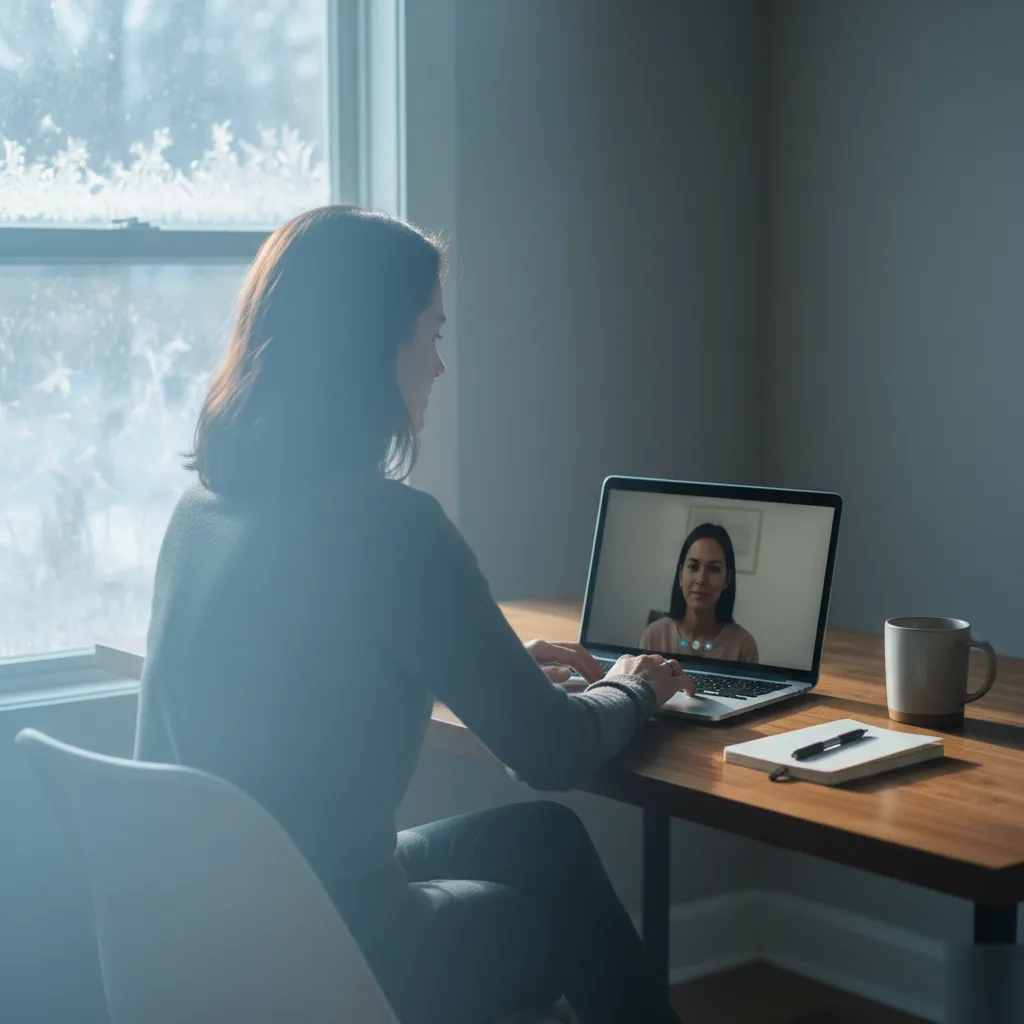
Table of Contents
ToggleConditions Treated Through Telehealth at Cabot Psychological Services
People reach out to us for all kinds of reasons. Some folks have been struggling for years. Others just hit a wall last Tuesday and need to talk to someone now.
Our experienced mental health clinic offers telehealth services covering a wide range of conditions, treated with the same evidence-based approaches we’d use sitting across from you in person. Families in Minneapolis dealing with a child’s new ADHD diagnosis can get started right away. Couples working through communication breakdowns don’t have to wait for a Saturday opening at a clinic near Uptown. You log on from wherever you are, we get to work.
Here’s a look at what we treat most often through telehealth:
- OCD using Exposure and Response Prevention, the gold standard approach
- Anxiety disorders, including generalized anxiety and panic
- Depression and treatment-resistant depression
- ADHD in adults and children, from evaluation through medication management
- Couples and marriage therapy, including communication coaching and infidelity recovery
- Family therapy for parent-child conflict, blended families, and co-parenting
We also do autism spectrum evaluations. That surprises people sometimes. But a good portion of the assessment process involves clinical interviews and behavioral observation, things that translate well to a video session. Families in the Nokomis and Longfellow areas have told us that scheduling autism testing is far less stressful when nobody has to fight traffic across Minneapolis.
Nine times out of ten, the condition someone calls about isn’t the only thing going on. A teen with ADHD might also be dealing with anxiety. A parent seeking couples therapy might realize they need individual support for postpartum depression too. That’s why we coordinate across providers on our team, so your care actually connects instead of living in separate silos.
According to the American Psychological Association, telehealth therapy produces outcomes equal to in-person care for most mental health conditions. You’re not settling for less. You’re choosing a format that fits your life.
How a Telehealth Mental Health Appointment Works Step by Step
People ask us this all the time. “What actually happens when I log on?” Fair question. Here’s exactly how it goes. our Minneapolis mental health clinic page our Minneapolis mental health clinic page.
- You book your spot. Pick a time that works for your schedule. Morning before the kids wake up, lunch break at your office near Uptown, late afternoon. You’ll get a confirmation email with a secure video link.
- Complete your intake forms online. We send these ahead of time so you can fill them out from your couch. No clipboard in a waiting room. For families or couples, each person gets their own form.
- Log on a few minutes early. Use your phone, tablet, or laptop. Test your camera and mic. Find a quiet spot where you feel comfortable talking openly.
- Your provider joins the session. We start by checking in. What’s going on right now? What brought you here? For ADHD concerns or OCD symptoms, we’ll ask about specific patterns you’ve noticed day to day.
- You work together in real time. This isn’t a passive experience. Your therapist might walk you through CBT techniques, talk through couple communication patterns, or begin mapping out next steps for autism testing. It feels like a real conversation because it is one.
- Wrap up with a clear plan. Before you sign off, you’ll know what to focus on before next time. We schedule your follow-up right there.
The whole thing usually runs 50 to 60 minutes. Most people tell us they forgot they were on a screen after the first few minutes.
Couples in Minneapolis sometimes worry the format won’t work for two people. It does. We’ve guided hundreds of sessions where both partners are in the same room on one device or joining from separate locations across the city. Either setup works fine.
Wondering if this is right for your family? Give us a call and we’ll help you figure it out.
One thing we hear a lot from parents in the Nokomis area and across south Minneapolis is that teens show up more consistently when there’s no car ride involved. Less resistance, more follow-through. That matters when you’re trying to build consistency with something like child therapy or adolescent OCD treatment. You can explore more about what we offer on our Minneapolis mental health clinic page.
Why Minneapolis Winters Make Telehealth the Smarter Choice for Consistent Care
You’ve been making progress in therapy. Real progress. Then January hits, the wind chill drops to negative twenty, and suddenly that drive across Minneapolis feels impossible.
We hear this every year. Clients cancel sessions in December, January, February. Not because they want to stop. Because the roads are bad, the car won’t start, or they just can’t face scraping ice off the windshield after a long day. By March they’re starting over, rebuilding momentum they already had.
Telehealth mental health services remove that entire problem. Snow emergency on Lyndale? Doesn’t matter. You’re already home. Polar vortex parked over Minneapolis for a week straight? Your session still happens at the same time, same day. Consistency is everything in mental health treatment, and our winters are the single biggest threat to it.
Think about what skipping three or four sessions actually costs you:
- OCD exposures lose their edge when gaps stretch too long
- Couples working through conflict patterns slide back into old habits fast
- Kids and teens with ADHD lose the structure that keeps them on track
- Families in crisis can’t afford to wait for a thaw
According to the American Psychological Association, consistent session attendance is one of the strongest predictors of positive therapy outcomes. The weather isn’t just an inconvenience. It’s a clinical issue.
And it’s not only winter. Spring flooding near the North Loop, summer construction on 35W, fall schedules packed with school activities. Minneapolis always has something that could get between you and your appointment. Telehealth takes geography out of the equation entirely.
We’ve had clients log in from their parked car during a kid’s practice. From a quiet bedroom in Nokomis while the baby naps. From a home office in Whittier between meetings. The flexibility isn’t a luxury, it’s what makes treatment actually work long-term.
Insurance Coverage and Minnesota Licensing for Telehealth Mental Health
One of the first things people ask us is whether their insurance covers telehealth mental health services. The short answer: almost always yes.
Minnesota law requires most health plans to cover telehealth the same way they cover in-person visits. That’s not a suggestion. It’s state law. So if your plan covers therapy or a psychiatric evaluation in an office, it should cover the same service through video. We verify your benefits before your first session so there aren’t surprises on your end.
Here’s what we check when you call or fill out our intake form:
- Whether your plan is in-network with our practice
- Your copay or coinsurance for outpatient mental health
- Any session limits or prior authorization requirements
- Coverage differences between therapy and medication management visits
Most major carriers in Minneapolis cover our sessions. We work with plans from Blue Cross Blue Shield, HealthPartners, PreferredOne, UCare, and others. If you’re on Medical Assistance or MinnesotaCare, telehealth is covered there too. We see families near Powderhorn and across the city who’ve been putting off care because they assumed it wouldn’t be covered. That’s one of the biggest myths we run into.
Why Licensing Matters More Than You Think
Every provider on our team holds an active Minnesota license. That matters because telehealth rules are state-specific. A therapist licensed only in Wisconsin can’t legally treat you while you’re sitting in your Minneapolis apartment. According to the Minnesota Board of Psychology, providers must be licensed in the state where the client is located during the session.
When you book with us, you’re seeing someone who meets Minnesota’s standards for education, supervised clinical hours, and ongoing training. Our therapists and psychiatric providers carry credentials like LICSW, LP, LPCC, and PMHNP. But credentials alone don’t mean much if someone can’t connect with you. We hire people who are good at this work and good at doing it through a screen.
Not sure what your plan covers? Give us a call. Our team handles the insurance piece so you can focus on getting help.
What to Expect From Your First Telehealth Session and Beyond
You click the link. Your therapist’s face appears. And within a few minutes, you forget you’re even on a screen.
That’s what we hear from people week after week. The first session feels a little unfamiliar, sure. But it stops feeling strange faster than most people expect. Here’s what actually happens when you start telehealth mental health services with us in Minneapolis.
Before You Connect
We send you a secure link by email or text. No app downloads, no complicated logins. You just need a phone, tablet, or computer with a camera. Find a quiet spot in your home, your car, even a private office near Uptown. Wherever you can talk openly without interruption works fine.
During Your First Session
Your provider walks through a few things in a clear order:
- A quick check of your audio and video so nothing gets in the way.
- A conversation about what brought you in, whether that’s anxiety, OCD, ADHD, relationship stress, or something you can’t quite name yet.
- Questions about your history, your daily life, and what you want to change.
- A plan for next steps, including how often you’ll meet and what approach fits best.
Nobody expects you to have it all figured out on day one.
What Happens After That
Follow-up sessions usually run 45 to 60 minutes. Some people come weekly. Some shift to every other week once things stabilize. Couples often start weekly because there’s a lot to unpack, and families too. For kids doing therapy or autism testing prep, parents get a separate check-in so everyone stays on the same page.
One thing people notice pretty quickly is that staying consistent gets a lot simpler. No driving through Northeast Minneapolis in January slush. No rearranging your whole afternoon. You just show up where you already are.
According to the American Psychological Association, telehealth therapy produces outcomes equal to in-person care for most conditions. You’re not getting a lesser version of treatment. You’re getting the same work done with fewer barriers in the way.
Ready to see how it feels? Give us a call.
Frequently Asked Questions
Q: Can I really get quality mental health care through a video call in Minneapolis?
A: Yes, telehealth therapy produces outcomes equal to in-person care for most mental health conditions, according to the American Psychological Association. You are not settling for less. You are choosing a format that fits your life. Many clients in Minneapolis tell us they forgot they were on a screen after the first few minutes. The work is real, the connection is real, and the results are real.
Q: What conditions can be treated through telehealth mental health services?
A: We treat a wide range of conditions through telehealth, including OCD, anxiety disorders, depression, ADHD in adults and children, and couples or family therapy. We also do autism spectrum evaluations, which surprises some people. A good portion of that process involves clinical interviews and behavioral observation, and those translate well to video. Nine times out of ten, the condition someone calls about is not the only thing going on, so we coordinate care across our team.
Q: How does Minneapolis weather affect telehealth therapy consistency?
A: Minneapolis winters are the single biggest threat to consistent therapy. Clients cancel sessions in December, January, and February because roads are bad or the car will not start. Telehealth removes that problem completely. A snow emergency on Lyndale does not matter when your session happens from your couch. Skipping even three or four sessions can set back OCD treatment, couples work, and ADHD support significantly, and telehealth keeps that from happening.
Q: What do I need to do before my first telehealth appointment?
A: Before your first session, you will complete intake forms online from home, no clipboard in a waiting room. Then log on a few minutes early using your phone, tablet, or laptop. Test your camera and mic, and find a quiet spot where you can talk openly. Your provider joins and starts by checking in on what is going on right now. The whole session usually runs 50 to 60 minutes, and you will leave with a clear plan.
Q: Does telehealth work for couples therapy when both partners need to join?
A: Telehealth works well for couples therapy, and we have guided hundreds of sessions this way. Both partners can join from the same room on one device, or from separate locations across Minneapolis. Either setup works fine. Couples sometimes worry the format will feel awkward, but most people settle in quickly. We walk you through communication patterns and next steps just like we would in person.
Q: Will my teen actually show up consistently for telehealth therapy sessions?
A: Parents in the Nokomis area and across south Minneapolis tell us teens show up more consistently when there is no car ride involved. Less resistance, more follow-through. That matters a lot when you are trying to build consistency with child therapy or adolescent OCD treatment. Removing the commute removes one more reason to skip, and consistency is everything when it comes to real progress in mental health care.
Our Insurance Partners
We accept most major insurance plans to make care accessible


Cabot Clients Say
"Sessions with Amanda are empowering."
Sessions with Amanda are empowering. She is a deeply kind therapist who has helped me to process, heal, and develop as a person.
"I have been a client of Cabot since the inception in 2010"
I have been a client of Cabot since the inception in 2010; my experience with the therapists and administrative staff have always been positive. I trust them and have referred both family and friends to Cabot and all have come back thanking me for the referral and have benefited from the caring and compassionate work of the Cabot staff.
"Cabot provides a welcoming and safe environment"
Cabot provides a welcoming and safe environment for those who may be struggling or need additional support. Each time I come for an appointment I am welcomed with a smile and hello not only from my therapist but others who pass through the waiting room.

REACH OUT TO START YOUR HEALING JOURNEY TODAY
Fill out our form or call us directly to learn if Cabot Psychological Services is right for you or a loved one.


WE PROUDLY PARTNER WITH MANY MAJOR INSURANCE PROVIDERS, INCLUDING COMMERCIAL AND MEDICAID